
I've woken up with neck pain on the trail more times than I care to admit. After years of balling up a fleece jacket or settling for cheap inflatable pillows that deflate by 3AM, I started taking camping pillows seriously. The difference between a restless night and actually waking up ready to hike is often just the right pillow.
The best camping pillows balance three things: neck support that keeps your spine aligned, packability that doesn't eat up precious bag space, and weight you won't curse on mile 10. Memory foam models offer home-like comfort but add ounces. Inflatable options pack down to nothing but can feel like sleeping on a balloon. For backpacking, I lean toward compressible foam. For car camping, I bring the good stuff.
1. Bespilow Travel Pillow

The Bespilow takes the contoured neck pillow concept and shrinks it down for travel. The memory foam actually molds to your neck rather than just compressing flat. I tested this on a weekend trip and appreciated how the cooling cover kept sweat buildup down on a humid August night.
The contour shape works best for back sleepers. If you're a side sleeper like me, you might find yourself adjusting position more than usual. But for the weight and the relief it gives my cervical spine after a long day with a loaded pack, it's a solid compromise.
Pros:
- Memory foam holds its shape better than cheaper options
- Cooling cover actually makes a difference on warm nights
- Lightweight enough for backpacking trips
- Travel bag keeps it clean in your pack
Cons:
- Slim profile won't work if you like thick pillows
- Takes a night or two to get used to the contour
2. Weekender Gel Memory Foam Camping Pillow

This one targets the sweet spot between portability and comfort. At just over a pound, it's light enough for weekend trips without feeling like you're sleeping on your boots. The gel infusion helps with temperature regulation, though on truly cold nights it can feel cool to the touch initially.
The 12 by 18 inch size is compact, which means it saves space but also means less surface area than a standard pillow. Good for solo backpacking where every inch counts. Less ideal if you toss and turn a lot.
Pros:
- Gel foam stays cooler than standard memory foam
- Compact size fits easily in pack side pocket
- Supportive enough to prevent morning neck stiffness
- White cover wipes clean without fuss
Cons:
- Small footprint means your head can slide off if you move
- White shows dirt faster than darker colors
- Gel can feel cold on chilly mornings
3. Saheyer Memory Foam Camping Pillow
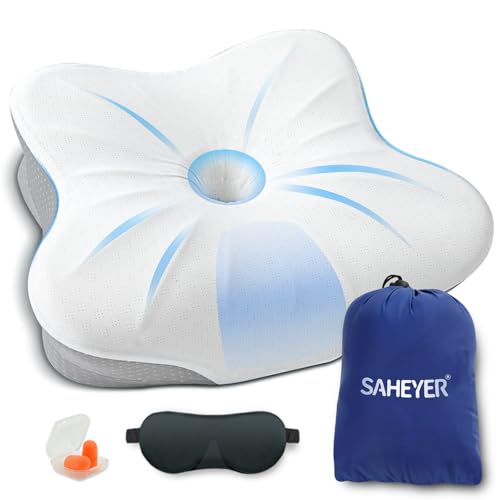
The Saheyer works well in a hammock setup, which is where I've gotten the most use out of it. The smaller dimensions fit the curve of a hammock better than larger pillows that bunch up. The grey cover hides the inevitable trail dust.
Memory foam quality is decent but not top-tier. It compresses under weight but bounces back within a few minutes. For the price point, it does what you need without luxury features.
Pros:
- Hammock-friendly size and shape
- Memory foam provides basic cervical support
- Breathable cover prevents overheating
- Grey color hides dirt well
Cons:
- Too small for ground tent sleeping if you move around
- Spot clean only, can't toss in washing machine
4. Mixiniso Neck Support Pillow

This roll-style pillow is a different approach. Instead of cradling your whole head, it supports just the neck curve. For side sleepers, you place it under your neck while your regular sleeping bag stuff sack or jacket supports your head. Takes some getting used to but the neck relief is real.
At 1.1 pounds, it's light enough for thru-hiking. The portable bag keeps it from getting compressed by other gear. Sky blue color is easy to spot in a dark tent.
Pros:
- Cervical traction provides targeted neck support
- Works well combined with improvised head pillow
- Lightweight for what it delivers
- Portable bag protects it in your pack
Cons:
- Not a standalone solution for most people
- Small size means it's easy to lose track of
- Memory foam can retain heat in summer
5. Alkamto Travel & Camping Comfortable Memory Foam Pillow

The Alkamto includes an extra cover, which I actually use. One stays on the pillow, one gets washed after trips. The temperature regulating case works better than basic cotton but isn't magic. Still, it beats waking up with a sweaty neck.
Memory foam quality is good. Contour shape works for back and side sleeping with minor adjustments. At 1.47 pounds, it's heavier than ultralight options but the comfort trade-off is worth it for trips under five days.
Pros:
- Extra cover means you always have a clean one
- Temperature regulating case reduces night sweats
- Good memory foam that holds shape
- Portable bag fits it snugly
Cons:
- Heavier than minimalist options
- Slightly bulky for ultralight backpackers
- White covers show every speck of dirt
6. Hikenture Camping Pillow
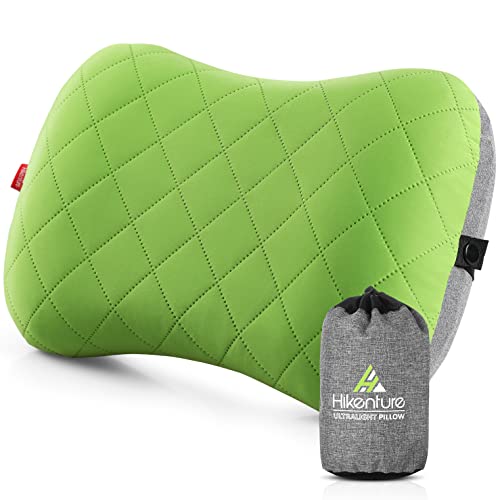
This is the inflatable option for people who hate inflatables. The removable washable cover makes a huge difference in comfort compared to bare plastic. You still have to blow it up, but the valve system is easy and doesn't leak overnight like cheaper models.
The lumbar support claim is marketing speak, but it does provide decent neck support when inflated properly. Too firm and you're sleeping on a beach ball. Too soft and you bottom out. Finding the right inflation level takes a try or two.
Pros:
- Ultralight and packs down to fist-sized
- Removable cover washes easily
- Reliable valve doesn't leak air
- Green color is easy to find in gear pile
Cons:
- Minimal height when deflated slightly
- Manual inflation takes effort after a long day
7. Trekology Ultralight Inflatable Camping Travel Pillow

At 0.24 pounds, this is the lightest option on the list. I bring this on long backpacking trips where ounces matter. The ergonomic shape actually supports your neck better than round inflatables. Quick to blow up, quick to deflate, quick to pack.
The trade-off for the weight is durability. It's held up fine for me, but I baby it. Keep it away from sharp objects and don't overstuff your pack. For thru-hikers counting grams, this is worth considering. While you're at it, take a look at our inflatable camping mattress.
Pros:
- Extremely lightweight at under 4 ounces
- Compresses to nearly nothing
- Ergonomic shape provides real neck support
- Fast inflation and deflation
Cons:
- Getting firmness right takes practice
- Navy color harder to spot in dark tent
- Not suitable for lumbar support despite claims
How to Pick the Right One
- For car camping: Go with the Bespilow or Alkamto. Weight doesn't matter, comfort does.
- For backpacking: Trekology ultralight if you're counting ounces, Weekender gel foam if you want comfort without crazy weight.
- For hammock camping: Saheyer fits the curve better than larger pillows.
- For side sleepers: Alkamto or Weekender gel foam provide enough loft. Avoid the neck roll unless you pair it with something else.
- For back sleepers: Bespilow contour or Hikenture inflatable work well.
- For warm weather: Weekender gel foam or Alkamto with temperature regulating cover.
Bottom Line
A good camping pillow is the difference between waking up sore and waking up ready to hike. For most weekend warriors, the Weekender gel foam or Hikenture inflatable hit the sweet spot. Thru-hikers should look at the Trekology ultralight. Whatever you choose, make sure it supports your neck properly because a bad night's sleep ruins the next day on the trail. For related gear, check out our quality sleeping bag.


