
I learned this the hard way on day three of the Mountains-to-Sea Trail. Ran out of water between resupply points and had to make a call: drink from a questionable creek or push through dehydrated. A good purifier removes that choice entirely.
What matters most is weight versus capacity. A straw filter like the LifeStraw works when you're kneeling at a stream. A pump system like the Katadyn lets you fill bottles for camp. Squeeze filters split the difference. Each has trade-offs based on how you hike and where your water comes from.
1. Lifestraw Personal Water Purifier
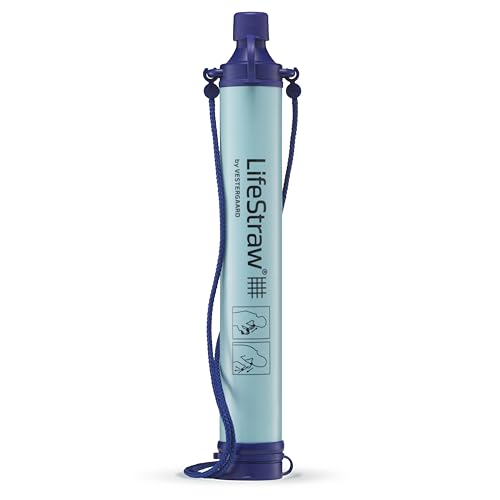
The LifeStraw is about as simple as water filtration gets. No batteries, no pumping, no moving parts. You stick one end in the water and drink. That's it.
It filters out bacteria and parasites but not viruses. For most North American backcountry water, that's fine. The hollow fiber membrane does the work, pulling out anything bigger than 0.2 microns. You'll taste some silt in silty water, but you won't get giardia.
Pros:
- Weighs almost nothing, easy to carry anywhere
- No setup or maintenance in the field
- Filters up to 1,000 liters before replacement
- No batteries or chemicals needed
Cons:
- Can't filter viruses or chemicals
- Drinking directly from streams gets awkward after a while
- Needs backflushing if it clogs
2. Katadyn Hiker Microfilter Water Purification Unit
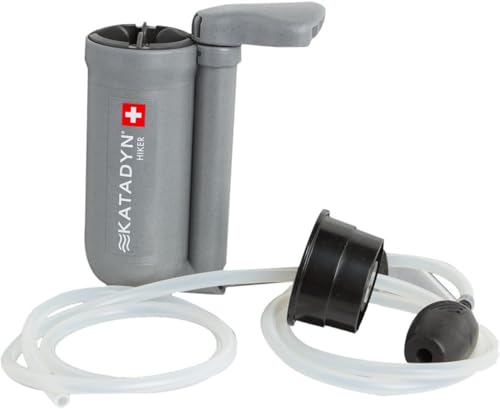
This pump filter has been around forever because it works. You drop the intake line into your water source, attach the output to your bottle, and pump. Takes maybe two minutes to fill a liter.
The microfilter catches bacteria and protozoa. It won't catch viruses, but like the LifeStraw, that's rarely an issue on the trail in the States. The real advantage is filling bottles so you're not tied to a water source.
Pros:
- Pumps water into any container
- Replaceable filter element lasts a long time
- Removes sediment better than straw filters
- No electronics to fail
Cons:
- Slower than squeeze systems
- Filter needs cleaning to maintain flow rate
- Still won't remove viruses
3. Aquasiv Day Hiker Squeeze Filter
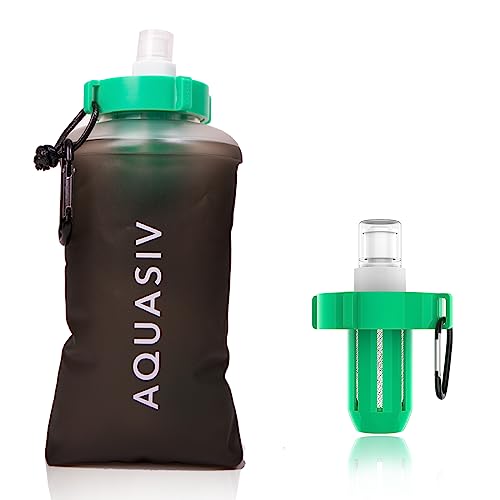
Squeeze filters are fast becoming my go-to. Fill a soft bottle or bladder at the source, screw this on top, and squeeze clean water into your bottle or straight into your mouth.
The AQUASIV is compact and light. The filter membrane removes bacteria and protozoa. It's reusable, which matters if you're out for more than a weekend.
Pros:
- Super light, under half a pound
- Fast filtering with good flow rate
- Fits standard water bottle threads
- No pumping required
Cons:
- Filter clogs faster in turbid water
- Doesn't remove viruses
4. Katadyn Vario Water Filter

The Vario uses two filters in series: a ceramic pre-filter and a glass fiber element. This extends filter life because the ceramic catches the big stuff before it reaches the main filter.
It's heavier than the Hiker but filters faster. Good for small groups where you're pumping water for multiple people. The dual filter system means you're not replacing cartridges as often.
Pros:
- Dual filtration extends filter life significantly
- Adjustable flow rate based on water quality
- Works well for groups
- Replaceable ceramic element saves money
Cons:
- Heavier at 1.66 pounds
- More complex setup than single-filter systems
- Takes practice to get the flow rate right
5. Lormandy Straw Water Filter

Another straw-style filter, similar concept to the LifeStraw. This one's a bit shorter at 6 inches, which makes it easier to pack in a side pocket.
Filters the same bacteria and protozoa you'd expect. Works fine for emergency use or as a backup filter in your kit.
Pros:
- Compact size fits anywhere
- No maintenance needed in the field
- Cheap enough to keep spares
Cons:
- Limited capacity compared to pump systems
- Can't filter out chemical contaminants
- Shorter lifespan than premium filters
6. Katadyn Befree 1.0l Water Filter

The BeFree is a squeeze filter built into a soft flask. Fill it at the stream, shake it to wet the filter, and drink straight from the cap or squeeze into another container.
At 0.14 pounds, it's one of the lightest full systems out there. The 0.1 micron filter catches bacteria and protozoa with fast flow. Easy to clean by swishing water around inside.
Pros:
- Incredibly light and packable
- Fast flow rate means less work
- Simple to clean on the trail
- Clear bottle lets you see water level
Cons:
- Only 1 liter capacity
- Won't filter viruses or chemicals
7. Sawyer Products Mini Water Filtration System

The Sawyer Mini is everywhere on the trail for good reason. It's tiny, works as a straw or inline filter, and screws onto standard water bottles and hydration bladders.
Filters down to 0.1 microns, removing bacteria and protozoa. The filter is backflushable, so you can clean it repeatedly and extend its life. Compatible with pretty much any water container you already own. While you're at it, take a look at our portable water filter. While you're at it, take a look at our hydration pack. While you're at it, take a look at our collapsible water container.
Pros:
- Weighs barely anything at 0.22 pounds
- Extremely versatile attachment options
- Affordable and widely available
- Long-lasting with proper maintenance
Cons:
- Flow rate slows as filter ages
- Doesn't filter viruses
How to Pick the Right One
- Solo day hiker drinking from clear streams: LifeStraw or Sawyer Mini
- Weekend backpacker needing camp water: Katadyn Hiker or BeFree
- Group camping with multiple people: Katadyn Vario or pump system
- Ultralight thru-hiker: BeFree or Sawyer Mini
- Emergency kit backup: Any straw filter like Lormandy
Bottom Line
I keep a Sawyer Mini in my pack and a BeFree for longer trips. The Mini weighs nothing and works with any bottle. The BeFree is faster when I'm filtering for dinner and breakfast. Neither one is perfect, but both beat carrying five pounds of water uphill.


